If you've been watching Pleasanton listings since spring, you've absorbed two contradictory headlines. In March, the story was Ruby Hill: gated, golf-course, seven-figure homes trading up 27 percent year over year while the rest of the city cooled. By August, the story flipped so quietly that most market summaries haven't caught up. The luxury segment that was outrunning last year's pace through May has spent the summer falling behind it, month after month, while the ordinary $1.3 million to $1.7 million home has kept selling at a steadier clip than almost anyone predicted.
This matters if you're comparing Pleasanton to Danville or San Ramon and trying to figure out where your money actually lands right now. The citywide median tells you almost nothing about which price band you're competing in. The segment breakdown tells you everything.
What the Headline Number Actually Shows
According to the Bay East Association of REALTORS, the median sale price for detached single-family homes in Pleasanton was $1,570,000 in July 2026, down 6.52 percent from July 2025. Read on its own, that looks like a market losing steam across the board. It's the kind of number that shows up in a portal snapshot and gets treated as the whole picture.
It isn't. The sale-to-list ratio came in at 98 percent in July, the first month all year sellers didn't average full asking price. Homes still sold in an average of 27 days, faster than the 31-day average from a year earlier. That's not a market falling apart. That's a market where the easy overbid era has ended for some homes and not others, and the "some" and "others" split cleanly along price lines.
The Segment That Flipped
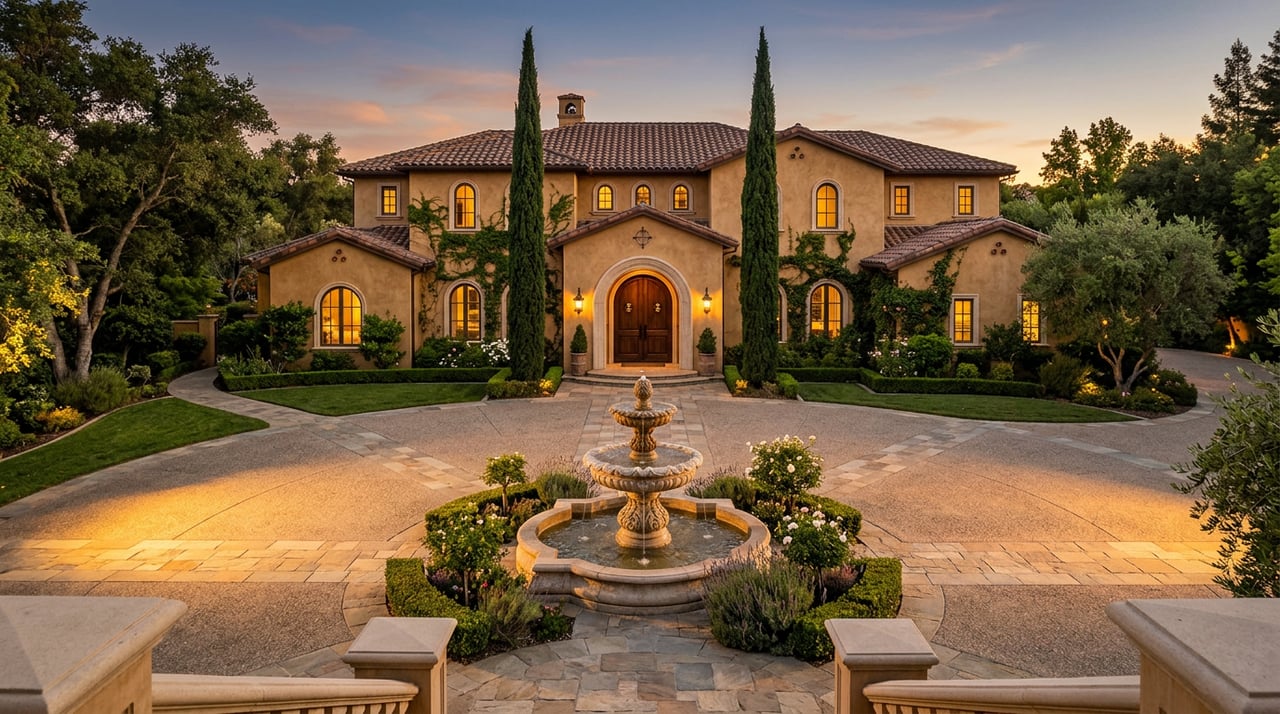
Here's the part that doesn't show up in a citywide summary. Through May 2026, homes priced above $3 million (the Ruby Hill, Kottinger Ranch, and Castlewood range) had already matched all of 2025's full-year sales pace, 22 transactions year to date against 21 at the same point the prior year. That's the number behind the spring narrative of a red-hot luxury tier.
By July, that same segment had fallen nine sales behind 2025's pace, a gap that widened for three straight months running. Local market commentary tied to the July Bay East report attributes this to the same forces cooling the broader region: mortgage rates sitting at 6.4 to 6.7 percent on a 30-year fixed, and buyers at every price point getting more selective about what they'll act on. The difference is that luxury buyers, who are rarely under pressure to move on a timeline, are the ones who can afford to wait out a rate environment that doesn't feel urgent. A family that needs to be in a school zone by fall doesn't have that luxury, no matter what price band they're shopping in.
Meanwhile, the $1.3 million to $1.699 million range, which covers a lot of Birdland, Val Vista, Vintage Hills, and Mohr Park, has held up noticeably better than the overall market. That band alone accounted for 37.7 percent of all 2026 year-to-date sales in Pleasanton. It's the busiest single price tier in the city, and it's the one carrying the market's actual momentum while the top of the market cools.
| Segment | Spring 2026 pace vs. 2025 | Summer 2026 status |
|---|---|---|
| $3M+ (Ruby Hill, Kottinger Ranch, Castlewood) | Matched full-year 2025 pace by May | Nine sales behind 2025, gap widening 3 straight months |
| $1.3M–$1.699M (Birdland, Val Vista, Vintage Hills, Mohr Park) | Steady | 37.7% of all 2026 YTD sales, holding up better than overall market |
| Citywide median | N/A | $1,570,000 in July 2026, down 6.52% year over year |
Why the Middle Is Absorbing the Demand
The mid-tier isn't holding by accident. Pleasanton's employment base gives that price band a floor the luxury segment doesn't have in the same way. Hacienda Business Park anchors a cluster of employers, including Workday, a major Kaiser Permanente presence, Safeway and Albertsons, and Veeva Systems, and that concentration of local jobs means demand for housing in the $1.3 to $1.7 million range doesn't depend entirely on buyers commuting into San Francisco or Silicon Valley. Add the Dublin/Pleasanton BART station, which makes a reverse commute (living in Pleasanton, working in Oakland or the city) genuinely workable for a two-income household, and you get a buyer pool that shows up whether or not the broader region feels frothy.
Ruby Hill and Kottinger Ranch don't have that same built-in urgency. Those are largely discretionary purchases, upgrade moves rather than first arrivals, and discretionary buyers are exactly the ones who pull back first when financing costs climb and nothing forces their hand.
What This Means If You're Comparing Neighborhoods Right Now
If you're weighing Pleasanton against Danville or San Ramon on price alone, the citywide median will mislead you either direction. A buyer targeting the $1.3 to $1.7 million range is still walking into real competition, homes in that band are still moving quickly and the tier is absorbing more of this year's sales than any other. A buyer or seller working in the $3 million-plus tier, Ruby Hill's gated streets around the Jack Nicklaus-designed golf course or the hillside lots in Kottinger Ranch, is operating in a market where the timeline has stretched and the leverage has shifted. Nine sales behind pace, three months running, is not a blip. It's a trend a seller in that tier needs to price around rather than wish away.
Inventory tells a similar story. Active listings sat at roughly 33 homes in January 2026, climbed to 90 by June, then eased slightly to 83 in July, with months of supply easing from 2.3 to 2.0. That's still a seller's market by the classic five-to-six-month benchmark, but it's a seller's market with meaningfully more room to negotiate than Pleasanton has seen since before 2021, and the room is not evenly distributed across price tiers.
The Part Worth Sitting With
A market where the top and the middle are moving in opposite directions is harder to read from a portal listing, but it's not harder to understand once you see the segments separately. The city's downtown, preserved since Pleasanton's 1894 incorporation, and its newer master-planned pockets aren't just different in character. Right now they're behaving like two different markets wearing one median price.
A Few Questions Worth Asking Before You Act
Is Ruby Hill still a good long-term buy if the segment has cooled? The slowdown is about pace and negotiating leverage, not a collapse. Homes there are still selling, just with more room for buyers to negotiate and longer decision cycles than the mid-tier sees.
Does a 6.5 percent year-over-year dip in the median mean Pleasanton overall is a buyer's market now? Not by the standard measures. Two months of supply and 27-day average days on market are still seller-favorable conditions. The dip in the median reflects the mix of what's selling as much as it reflects price softening in any one segment.
Should I wait for rates to ease before buying in the $1.3 to $1.7 million range? That band is currently the busiest in the city, which means waiting carries its own risk of competing against more buyers rather than fewer. Timing a purchase around a segment that's already absorbing this much demand is a different calculation than timing one in a slower luxury tier.
If you're trying to figure out which side of this split your own search falls on, that's exactly the kind of read a citywide average can't give you. Linda Traurig tracks Pleasanton's market by segment and neighborhood every month, not just by the headline number, and can walk you through what your specific price range and timeline actually look like right now. Reach out for a conversation, or start with an instant home valuation to see where your own numbers land inside this picture.