If you are looking at Dublin as an investment market, one number will not tell the whole story. Rents are solid, buyer demand is active, and the city offers unusually practical ADU options, but purchase prices are also high enough that your strategy matters. This guide will help you understand Dublin rent ranges, where ADUs can improve flexibility, and what questions to ask before you buy. Let’s dive in.
Why Dublin Stands Out
Dublin sits in a strong commuter corridor with a renter base that supports steady housing demand. According to U.S. Census QuickFacts for Dublin, the city had an estimated 2024 population of 70,544, median household income of $214,385, median gross rent of $3,191, and a mean commute time of 35.9 minutes.
That combination matters if you are comparing Dublin with other East Bay markets. Higher household incomes can support higher rents, while commuter demand can keep both rental and resale interest active over time. The city’s demographic snapshot also estimates that 38.99% of households are renter-occupied, which points to a meaningful rental audience in the local market.
Dublin Home Prices and Investor Math
Dublin can be attractive on the rental side, but the entry price is not low. Census QuickFacts puts the median owner-occupied home value at $1,317,100, while Zillow’s Dublin housing data showed a median list price of $1,195,814 in March 2026, with homes pending in about 20 days.
For many buyers, that means the investment story is less about simple cash flow and more about smart structure. A favorable purchase basis, a larger down payment, a house-hack setup, or added income from an ADU or JADU can make a meaningful difference. If you are shopping in Dublin, it helps to evaluate the property not just as a home, but as an income plan.
Dublin Rent Ranges in 2026
One of the biggest mistakes investors make is treating rent as a single fixed number. In Dublin, different data sources track different parts of the market, so the best approach is to think in terms of a rent range.
As of spring 2026, Zillow’s asking rent index for Dublin showed average rent at $3,072. Point2Homes reported median apartment rent at $2,884 in March 2026, Trulia’s Dublin rent trends showed average rent at $3,498 in April 2026, and Census QuickFacts lists median gross rent at $3,191.
These numbers do not necessarily conflict. They reflect different housing types and tracking methods. For most buyers, the takeaway is simple: Dublin rents appear to sit in a broad band from the high $2,000s to the mid $3,000s, depending on property type and size.
Typical Rents by Bedroom Count
Current rental trackers suggest these general ranges in Dublin:
- Studios: about $2,380 to $2,450 according to Rentometer
- 1-bedroom units: about $2,550 to $2,560 according to Trulia
- 2-bedroom units: about $3,090 to $3,175 according to Rentometer
- 3-bedroom units: about $3,940 to $4,030 according to Rentometer
- 4+ bedroom units: about $4,100 to $4,970 according to Rentometer
Rent by Property Type
The type of property you buy in Dublin can change your rental outlook quite a bit. Trulia’s market trends separate local averages this way:
- Apartments: $3,109
- Houses: $4,100
- Townhomes: $4,150
That is useful if you are deciding between a condo, townhome, or detached home. In Dublin, houses and townhomes tend to command significantly higher rents than apartments, which may help offset the city’s higher acquisition costs.
Dublin Housing Stock and Strategy
Dublin offers more than one investment lane. According to the city’s demographic snapshot, 53.17% of housing units are detached single-family homes, 15.63% are attached single-family homes, 9.66% are in 5 to 19 unit buildings, and 17.03% are in 50+ unit buildings. More than half of the housing stock was built in 2000 or later.
That mix gives you several possible paths:
- A detached home with future ADU potential
- A townhome with strong rental demand but HOA review
- A condo or attached product with lower entry cost but more community rules
- A house-hack setup where you live in one unit configuration and rent another legal space
The city also notes that Dublin includes both market-rate rental communities and Below Market Rate and middle-income rental housing. For investors, that means you are competing in a market with multiple housing options, not just privately owned rentals.
How ADUs Can Change the Numbers
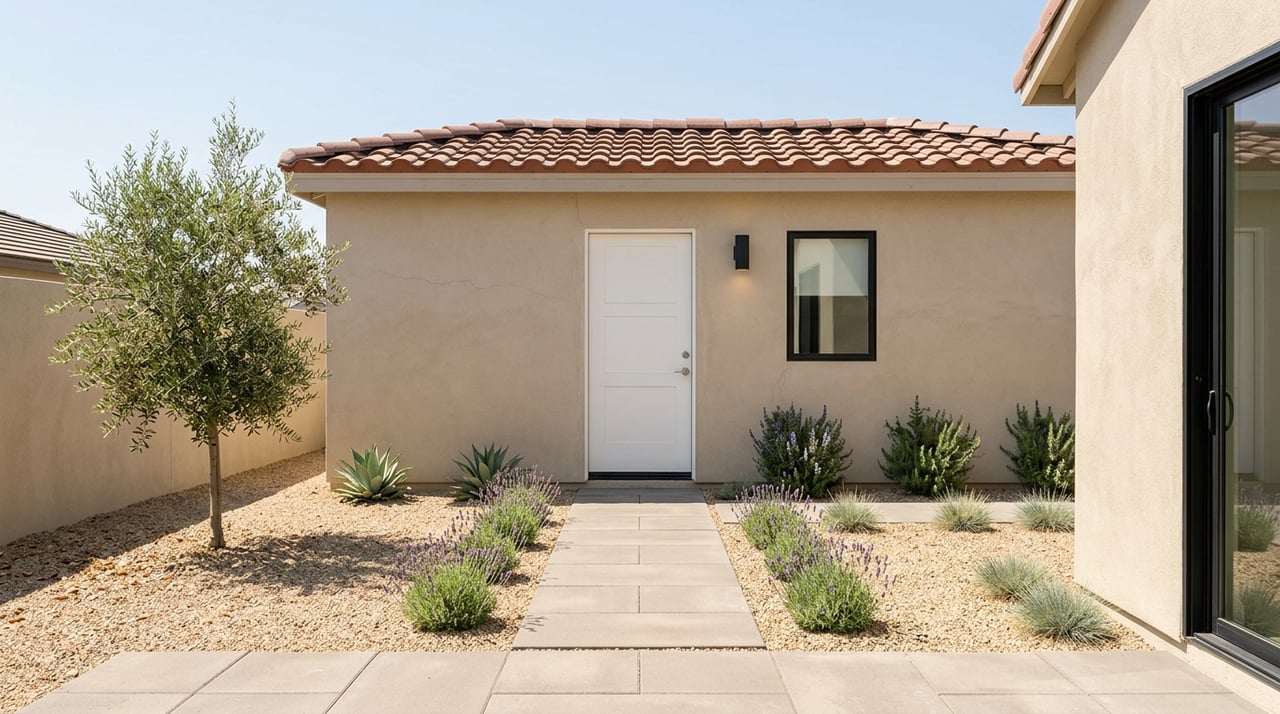
If you are trying to make Dublin’s price points work, ADUs deserve a close look. The city has a notably supportive program and offers tools that can reduce some of the friction for owners who want to add a unit.
According to Dublin’s Accessory Dwelling Unit program page, ADUs can be up to 1,200 square feet and JADUs can be up to 500 square feet. The city also offers eight permit-ready prototype plans ranging from 224 to 909 square feet.
That can matter if you want a more predictable path from idea to permit. Instead of starting from scratch, you may be able to explore a plan type that already fits city expectations. Dublin also runs an ADU Accelerator Program with rebates up to $7,500 for standard ADUs and up to $15,000 for deed-restricted low-income ADUs, along with fee waivers or reductions for qualifying projects.
Key Dublin ADU Rules to Know
Before you count on extra rental income, you need to confirm the property can support the unit you want to build or convert. Dublin’s ADU Manual is the best place to start.
Where ADUs Are Allowed
ADUs and JADUs are allowed in residential districts A, R-1, R-2, R-M, and PD districts that permit residential use, and also in C-1. The city reviews them ministerially, which means they are not subject to discretionary design review.
Unit Count Limits
On a single-family lot, the city allows a maximum of one ADU and one JADU. In multifamily districts, the city allows up to two detached new ADUs per property or up to 25% of legally established dwelling units, depending on the setup.
Setbacks and Placement
New attached and detached ADUs must be at least four feet from side and rear property lines. ADUs are not allowed in the front setback. If you are converting a legally permitted existing space or garage, setback requirements are generally more flexible.
Parking Rules
Parking can be more flexible than many buyers expect. Dublin states that parking is limited to one space per unit or bedroom, whichever is less. Studios do not need parking, JADUs do not need parking, some transit and site conditions can remove parking requirements, and legal conversions do not require replacement parking.
Rental and Ownership Rules
ADUs and JADUs cannot be rented for 30 days or less, so they are not a short-term rental play under these rules. Dublin also states that owner occupancy is not required for an ADU, but is required for a JADU. Neither an ADU nor a JADU may be sold separately from the primary residence.
Best Property Types for ADU Potential
In Dublin, detached homes often give you the clearest ADU path because they may offer more lot flexibility, easier parking solutions, and more control over the structure. Since detached single-family homes make up over half of the city’s housing stock, they are worth close attention if your goal is long-term rental income or a house-hack setup.
Townhomes and condos may still be useful investment options, especially when rental demand is strong, but they often require more review on the community side. If a property is governed by an HOA, the practical question is not just what the city allows, but also what the governing documents permit.
Questions to Ask Before You Buy
A property that looks promising online can fall apart quickly if the zoning, layout, or community rules do not match your plan. Before you make an offer, these are some of the most important questions to work through.
Zoning and Site Questions
Start with the property’s zoning district and any planned development overlay. Confirm whether the district allows the ADU or JADU size you want, whether the parking setup works, and whether the lot can support the unit count you have in mind under the city’s ADU Manual.
HOA Questions
If the property is in a common-interest community, review the CC&Rs carefully. The California Attorney General’s HOA consumer guidance notes that HOA governing documents vary from one association to another, so it is important to verify rental caps, minimum lease terms, guest parking rules, exterior-change approvals, and any restrictions that could affect an ADU or garage conversion.
Management Questions
You should also decide how hands-on you want to be after closing. Leasing, screening, maintenance, collections, and compliance can feel very different depending on whether you own a detached home, townhome, or condo. Your ideal setup depends on your time, your distance from the property, and how involved you want to be day to day.
A Smart Way to View Dublin Investments
Dublin can be a compelling market if you approach it with the right expectations. Rent levels are healthy, the city has a meaningful renter base, and ADU rules are more supportive than many buyers realize. At the same time, purchase prices are high enough that careful property selection matters.
For many buyers, the strongest opportunities may be properties that offer one of three advantages: a better-than-average basis, a clear path to ADU income, or a layout that supports house hacking. If you want help comparing Dublin homes, townhomes, or properties with ADU potential, Linda Traurig can help you evaluate the tradeoffs and move forward with a steady, well-managed plan.
FAQs
What is the average rent in Dublin, CA for investment analysis?
- Dublin rent data varies by source, but current figures place the market broadly from the high $2,000s to the mid $3,000s, depending on unit size and property type.
Are ADUs allowed on single-family properties in Dublin, CA?
- Yes. Dublin allows up to one ADU and one JADU on a single-family lot, subject to city rules on size, setbacks, and other site requirements.
Can you use an ADU in Dublin, CA as a short-term rental?
- No. Dublin states that ADUs and JADUs cannot be rented for 30 days or less.
Do Dublin, CA ADUs require owner occupancy?
- Owner occupancy is not required for an ADU, but it is required for a JADU under the city’s published rules.
What property types rent best in Dublin, CA?
- Current rent trackers suggest houses and townhomes often rent for more than apartments in Dublin, which can make them especially interesting for buyers comparing long-term rental strategies.
Should you check HOA rules before buying a Dublin, CA rental property?
- Yes. If the property has an HOA, you should review the CC&Rs for rental caps, lease terms, parking rules, and approval requirements for exterior changes or garage conversions.